
DE-RISKING NEW TECHNOLOGIES WITH QUANTITATIVE RISK ASSESSMENT AND TECHNO-ECONOMIC ANALYSIS
INTEGRATED ENERGY SOLUTIONS FOR RELIABLE, EFFICIENT, AND RESILIENT HEALTHCARE FACILITIES
ANALYZING ENERGY PATHWAYS FOR NEW FACILITIES
BALANCING ENVIRONMENTAL, ECONOMIC, AND SOCIAL RISKS
Energy transition projects must simultaneously balance complex environmental, economic, and social demands. At Insight Risk Systems, we can examine these all.
As an extension of our quantitative risk assessment of various hydrogen use-cases, we were engaged to analyze various energy pathways for a new healthcare campus.
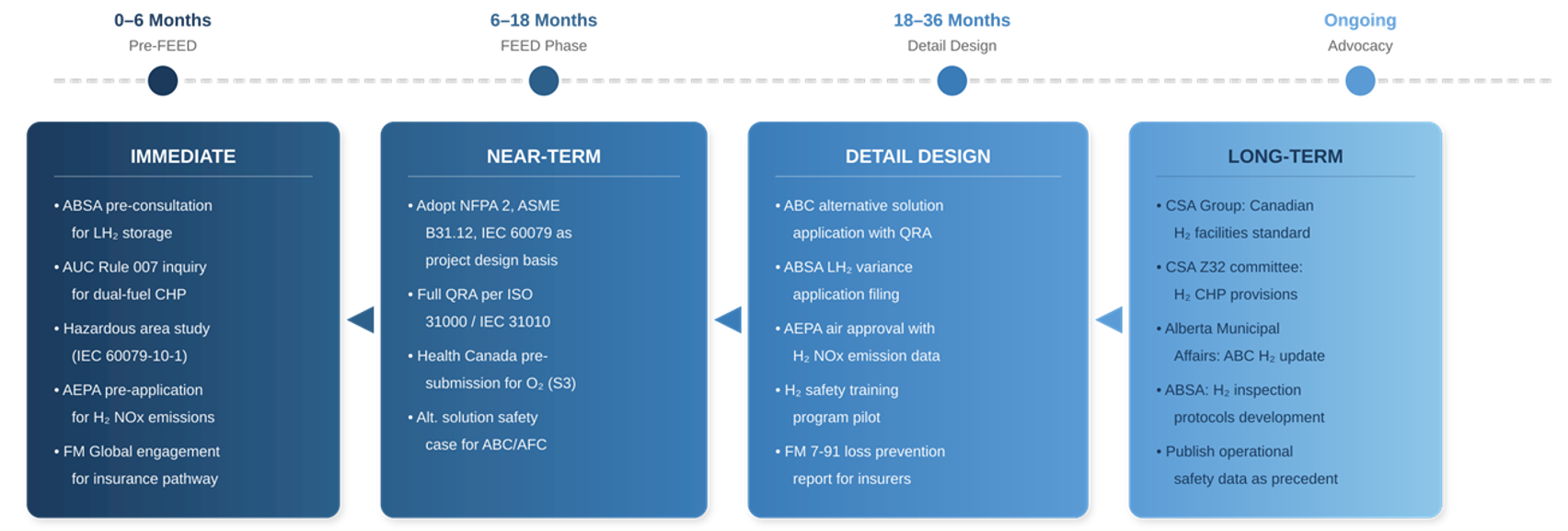
PROJECT DELIVERABLES
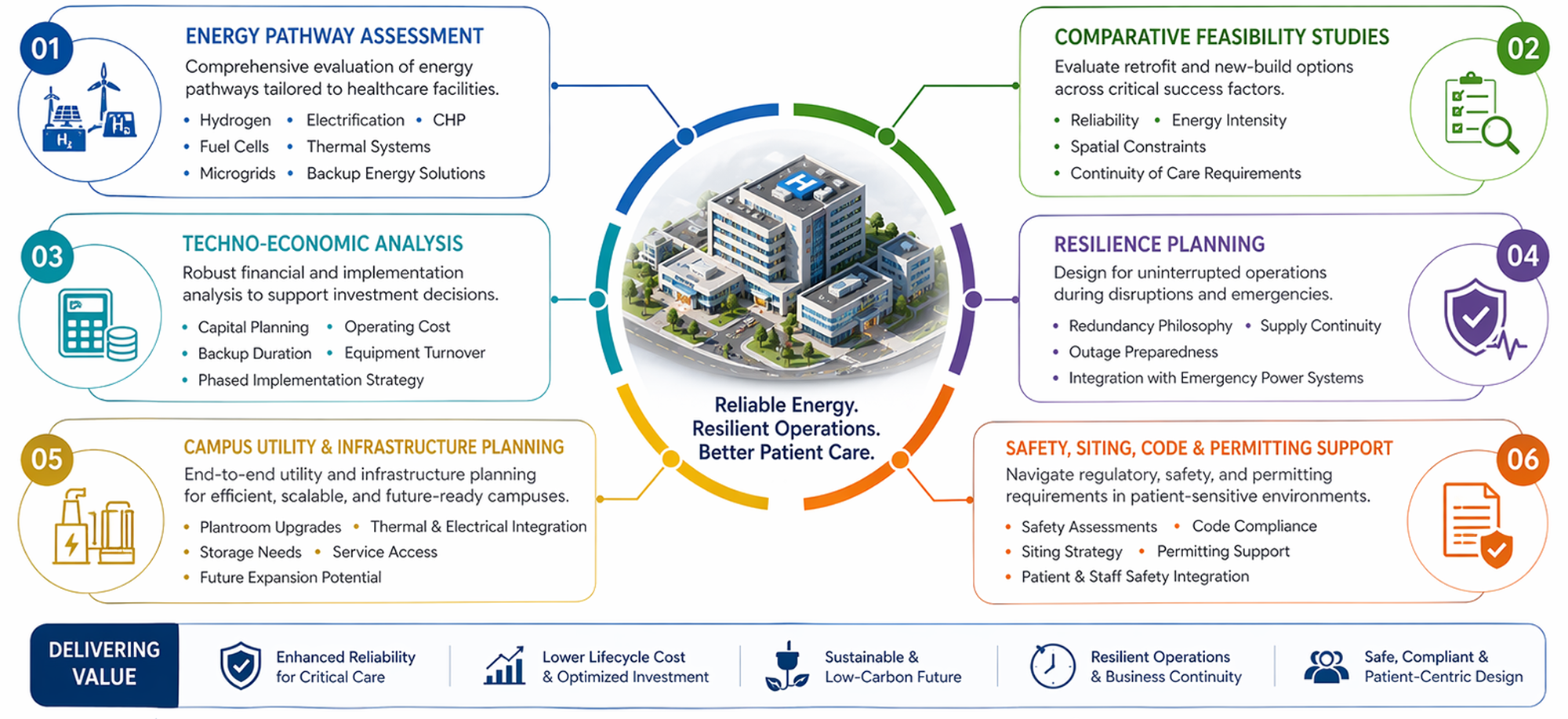
- Energy pathway assessment for various operations and energy solutions (hydrogen, electrification, combined heat and power, fuel cells, thermal systems, microgrids, and backup energy)
- Comparative feasibility studies to evaluate retrofit and new-build options
- Techno-economic analysis covering capital planning, operating cost, equipment turnover, and phased implementation strategy
- Resilience planning, including redundancy philosophy, supply continuity, outage preparedness, and integration with emergency power systems
- Safety, siting, code, and permitting support for deployment in critical infrastructure environments
PRACTICAL IMPLICATIONS
- Help owners compare multiple energy pathways instead of locking into a single technology option too early
- Support decisions that balance resilience, operating economics, emissions strategy, and long-term infrastructure value
- Reduce implementation risk by accounting for site constraints, legacy systems, and operational continuity requirements
- Strengthen capital planning and modernization strategies for reliable, future-ready healthcare energy systems