THE HIDDEN RISK: WHEN CRITICAL CONTROLS ERODE
IDENTIFYING HIGH-ENERGY HAZARDS IS KEY. KNOWING WHETHER YOUR CONTROLS STILL HOLD IS HARDER.
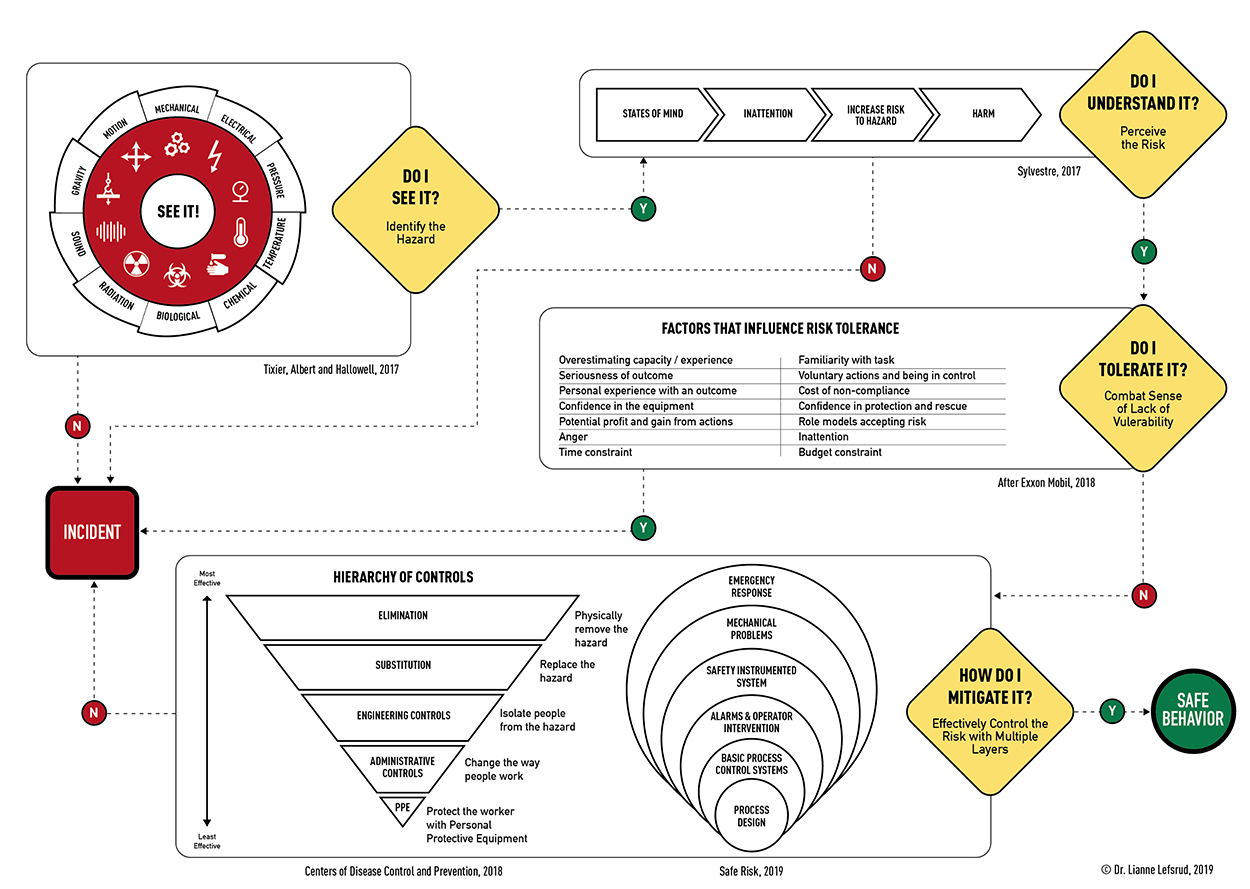
You have identified the high-energy hazards with the potential to cause fatalities or serious incidents within your operations. The challenge is knowing whether human and organizational factors are eroding the effectiveness of your critical controls across business units, and whether layers of protection require revision.
Our patented GapFinder data analytics provide line of sight into hazards, tasks, and work locations, enabling continuous improvement across your operation.
REDUCING SERIOUS INCIDENTS AND FATALITIES (SIFS) BY ANALYZING HUMAN & ORGANIZATIONAL FACTORS USING MACHINE LEARNING
Serious incidents and fatalities are rarely the product of a single failure. They emerge from interacting human and organizational factors that often go unnoticed until an incident occurs. Insight Risk Systems uses a multi-label machine learning framework and GapFinder analysis to link incidents to their underlying precursors, generate business unit-level risk profiles, and deliver short- and long-term recommendations grounded in peer-reviewed, evidence-based principles.
The result is a continuously updating analysis pipeline that helps operators verify critical controls in the field, align training to real operational conditions, and shift safety management from reactive reporting to predictive, self-correcting systems.
DATA THAT WE ANALYZED FOR A FERTILIZER COMPANY (SIF DATA FROM JANUARY 2016 – JUNE 2025)
- ~ 2.8K: SIF Data Across 4 Operationally Distinct Business Units
- 95%: Highest Model Accuracy Across Six ML Algorithms
- Common Risk Drivers: Competency Gaps Equipment Design and Integrity Issues
PROJECT DELIVERABLES
- SIF risk assessment analysis ‘pipeline’ designed for continuous updates and integration with evolving operational data
- Multi-label ML classification framework links each incident to multiple human (e.g., communication failures) and organizational (e.g., inadequate organizational learning response) factors simultaneously
- Business unit-level risk profiles identify unit-specific precursor combinations
- Evidence-based short-term and long-term recommendations grounded in Human & Organizational Performance (HOP), Resilience Engineering, and High-Reliability Organization (HRO) frameworks
PRACTICAL IMPLICATIONS
- Address risk as a system of interacting human, organizational, and technical factors rather than as isolated incidents
- Identify missing leading indicators, missing or weak controls, ineffective assurance, over-reliance on people, single points of failure, and high-consequence potential
- Prioritize consistent field-level verification of critical controls to ensure procedures are effectively implemented in practice to close key gaps
- Ensure alignment of hazards-tasks-controls for ‘work as done’, especially difficult to identify hazards (pinchpoints, energy isolation, line-of-fire)
- Evolve safety management from reactive reporting to predictive, self-correcting systems, supporting operational resilience and regulatory compliance