Evaluating Regional Infrastructure Risk (Like Hydrogen Hubs!)
Can you demonstrate it’s safe before you build it?
Energy infrastructure development won’t proceed unless it can be done safely. So safety isn’t an added cost. It’s the precondition.
Can you demonstrate it’s safe before you build it?
Energy infrastructure development won’t proceed unless it can be done safely. So safety isn’t an added cost. It’s the precondition.
New energy infrastructure, like a regional hydrogen hub, brings new use cases. The codes, standards and regulations that companies and municipalities rely on may not yet cover all of them. Without a clear regulatory foundation, good projects stall.
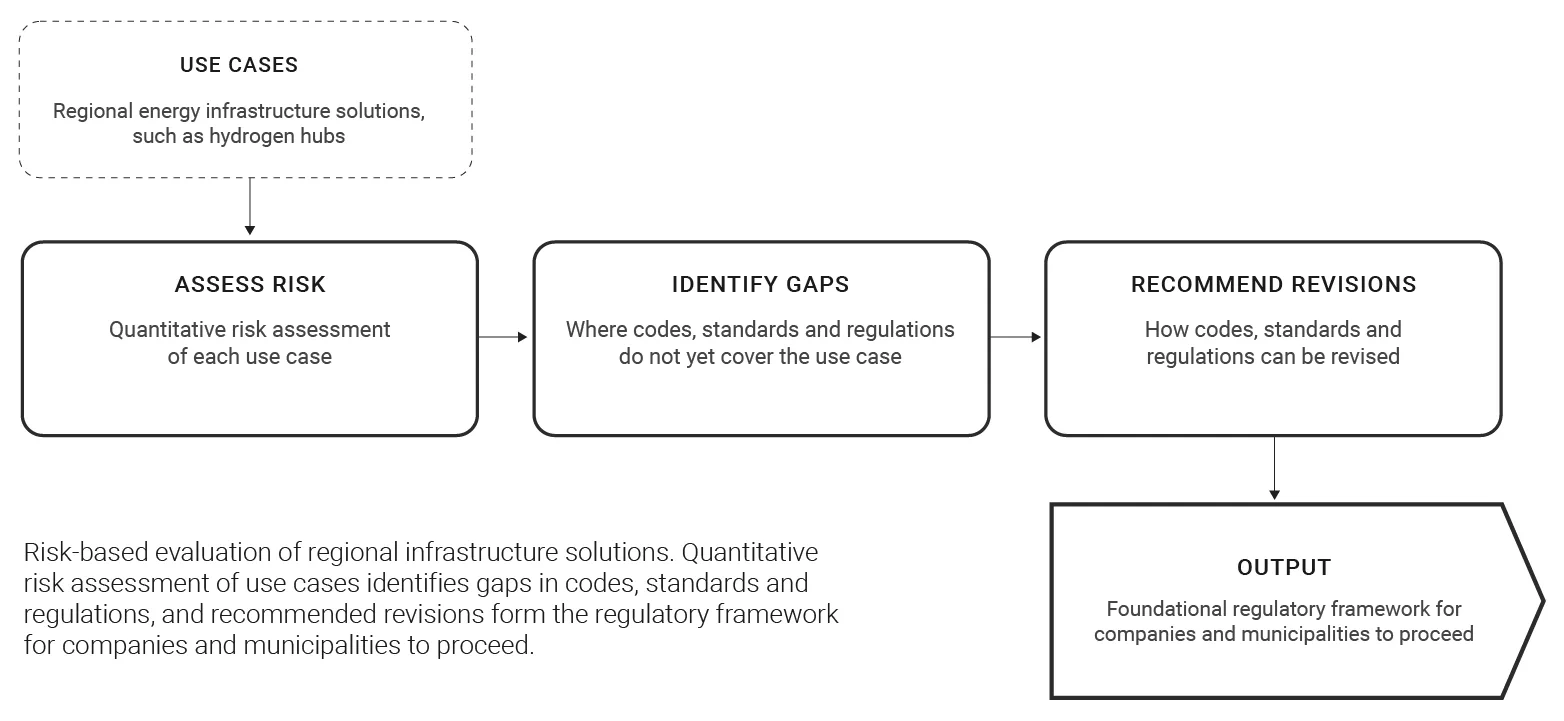
First.
Insight Risk Systems carries out quantitative risk assessment (QRA) of each use case. (QRA is engineer-speak for “putting numbers on how often something could go wrong, and how bad it would be.”)
Second.
The assessments show where current codes, standards and regulations fall short for those use cases.
Third.
You get recommendations for how those codes, standards and regulations can be revised to create the foundational regulatory framework that companies and municipalities need to proceed.
recent work includes de-risking the hydrogen value chain in Canada, and quantitative risk assessments of various hydrogen use cases.
as an extension of that work, Insight Risk Systems analyzed energy pathways for a new healthcare campus, from comparative feasibility and techno-economic analysis to resilience planning and siting, code and permitting support. (De-Risking New Technologies)