Automatically Distill Complex Regulatory Requirements into Transparent, Traceable Inspection Plans
Who is interpreting the new rules for your fleet?
Regulations change. Your engineering bench doesn’t grow to match.

Who is interpreting the new rules for your fleet?
Regulations change. Your engineering bench doesn’t grow to match.
Changing municipal, provincial and federal regulations can create complex inspection, maintenance and operational requirements. Yet the engineering expertise needed to interpret those changes, and to turn them into fleet maintenance plans, is often limited. So the work queues up on a few desks, or gets handled off the side of someone’s desk.
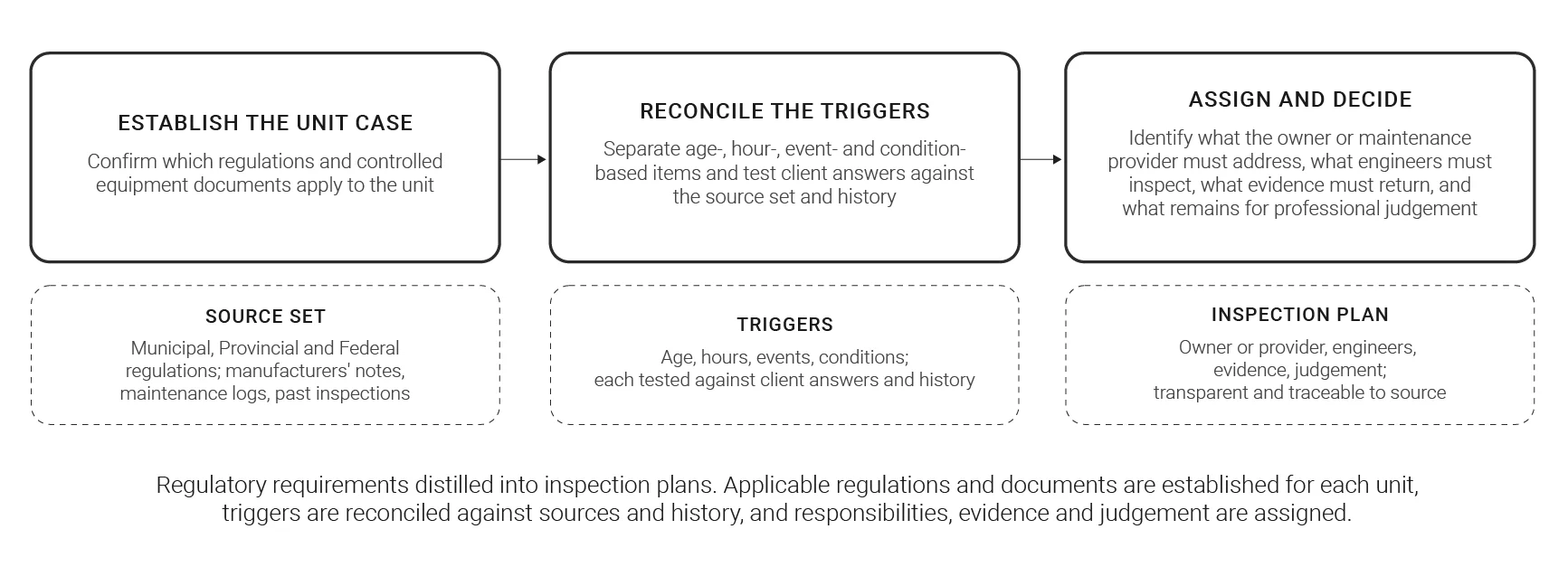
Prepare for regulatory change without multiplying engineering effort. Insight Risk Systems automates the development of fleet inspection plans in three steps.
First.
Confirm which regulations and controlled equipment documents apply to each unit (manufacturers’ notes, maintenance logs, past inspections).
Second.
Separate age-, hour-, event- and condition-based items, and test the answers you provide against the source documents and the unit’s history.
Third.
Identify what the owner or maintenance provider must address, what engineers must inspect, what evidence must come back, and what remains for professional judgement.
Automation does the sorting. Engineers keep the judgement.
| Transparent | i.e., the owner, the maintenance provider and the engineer can each see what is theirs to do. |
| Traceable | i.e., every item points back to the regulation or document that triggered it. |